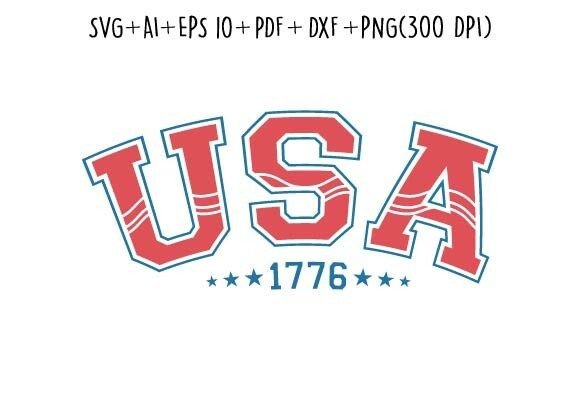
Review: USA 4th of July Retro Sublimation SVG for Stitchers
As an embroidery designer who spends half my life digitizing and the other half stitching, I have learned to look at vector files with a critical eye. We often see designs labeled for sublimation—like this USA 4th of July Retro Sublimation SVG—and wonder if they translate well to the needle. I recently pulled this file into my workflow to evaluate its potential for real-world Crafts and Graphics applications, specifically focusing on how a retro-themed, patriotic design holds up when converted from a flat print asset to a textured machine embroidery design.
First Impressions: Mood and Visual Personality
The immediate appeal of the USA 4th of July Retro Sublimation SVG lies in its nostalgic aesthetic. The "1776" motif combined with vintage typography creates a mood that is both celebratory and timeless. For a designer, this is gold. It moves away from the generic, overly bright fireworks clipart we see every June and offers something with character. The layout feels balanced, with strong central elements that draw the eye. However, viewing it as a vector intended for print means I had to mentally deconstruct it. How do those smooth gradients and sharp lines translate to thread? The visual personality suggests a project that values style over sheer density, which is a good starting point for modern custom apparel.
Real-World Application: The Tote Bag Test
To test its viability, I imagined a specific scenario: creating a limited-run handmade product for a local boutique’s Independence Day sale. I chose a heavy canvas tote bag design as the vessel. Canvas is forgiving, but it requires bold lines to stand out. The retro nature of the USA 4th of July Retro Sublimation SVG works beautifully here because retro styles often rely on solid blocks of color and distinct shapes rather than photorealistic shading.
If I were digitizing this for a sweatshirt embroidery project, the thick lettering of the "1776" would likely require a fill stitch to ensure coverage without excessive pull. The surrounding decorative elements might benefit from a combination of satins stitch for borders and running stitch for finer details. This versatility makes it a strong candidate for embroidered patch creation, where the backing stabilizes the fabric entirely, allowing for denser stitching without distortion.
Navigating Technical Constraints
While the design is visually striking, using a sublimation-focused SVG for embroidery requires caution. Since the product description lists AI, EPS, PDF, and SVG files, we are dealing with vector paths, not pre-digitized stitch files. This is a crucial distinction for any Etsy seller or craft business owner. You cannot simply load an SVG into an embroidery machine. You must digitize it or convert it using specialized software.
Here is where the rubber meets the road. Small details in the retro flourishes might get lost if the stitch density is too low, or they might become bulky knots if too high. When working on curved surfaces like caps, these dense areas can cause puckering. I would advise simplifying the tiniest elements if you are working with a small hoop size, such as a 4x4 inch hoop. For baby embroidery items, where softness is paramount, you would need to reduce density significantly and perhaps use lighter weight threads to prevent the fabric from stiffening.
Another consideration is fabric texture. On a smooth polyester blend, the design will pop. On a textured linen or a fuzzy fleece, fine lines may disappear. Always test your digitized version on scrap fabric first. Check how the thread colors interact with the background. A dark navy shirt might swallow up dark blue elements of the design, requiring you to add a white underlay or choose contrasting thread shades to maintain clarity.
Commercial Viability and Brand Consistency
For commercial embroidery projects, consistency is key. The USA 4th of July Retro Sublimation SVG offers a cohesive look that can be scaled across different products. Imagine offering a matching set: a tote bag, a kitchen towel, and a framed art piece. While the towel and frame might use the sublimation print directly, the tote could feature the embroidered version. This cross-media approach enhances brand recognition.
Customers trust products that look professional. A poorly digitized design with jumped stitches or loose threads undermines that trust. By taking the time to properly convert this vector into a high-quality digital embroidery file, you elevate the perceived value of the finished product. It transforms a simple graphic into a tactile personalized gift that feels substantial and well-made. This attention to detail is what separates a hobbyist from a professional small shop product creator.
Practical Designer Notes for Success
If you plan to use this design in your next embroidery project, keep these practical steps in mind:
- Verify Licensing: The file includes AI, EPS, PDF, and SVG formats. Ensure you understand the license terms for commercial use. Just because you can print it doesn't always mean you can sell stitched items without checking the specific artist's terms.
- Digitize with Care: Do not assume auto-digitizing will yield perfect results. Manually adjust stitch angles to follow the flow of the retro shapes. Use applique design techniques if you want to reduce stitch count on large areas.
- Stabilizer Selection: Match your stabilizer to your fabric. Cut-away stabilizer is best for stretchy fabrics like t-shirts, while tear-away works for stable woven cottons used in holiday embroidery decor.
- Test Contrast: Create black and white mockups of your digitized file. If the design loses its shape in grayscale, you need to adjust your stitch types or densities to improve definition.
- Consider the End Use: Will the item be washed frequently? If so, avoid extremely long satin stitches that might snag. Break them up with tack-down stitches or switch to fill stitches for durability.
Final Verdict
The USA 4th of July Retro Sublimation SVG is a versatile asset for the creative entrepreneur. It bridges the gap between digital design assets and tangible goods. While it requires technical knowledge to convert from a vector graphic to a stitch-ready format, the effort pays off in the quality of the final item. Whether you are creating printable mockup previews for your online store or stitching actual custom apparel for clients, this design offers a strong foundation. It captures the spirit of the holiday without relying on clichés, making it a valuable addition to your seasonal catalog. Just remember: the file is the starting point, but your skill as a digitizer and embroiderer is what brings it to life.