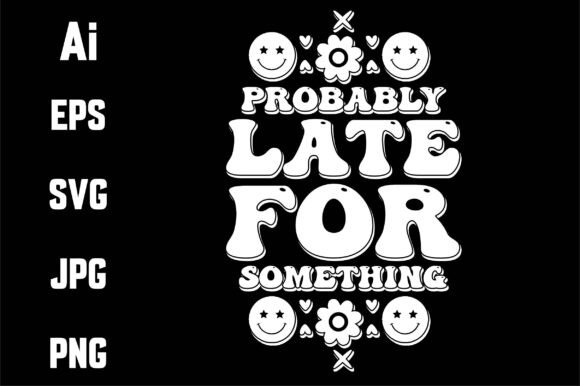
Reviewing Probably Late for Something Retro SVG
As a designer who spends more time staring at stitch simulations than I care to admit, I have learned that not every cute graphic translates well into thread. We live in an era where digital assets are abundant, but finding a machine embroidery design that balances aesthetic charm with technical feasibility is a different story entirely. Recently, I pulled up the Probably Late for Something , Retro SVG to evaluate its potential for real-world application. This isn’t just about whether it looks good on a screen; it is about how it behaves under the needle, how it reads on fabric, and whether it holds up as a viable product for a craft business.
First Impressions: Mood and Visual Personality
The first thing that strikes you about this design is its attitude. The phrase "Probably Late for Something" carries a relatable, self-deprecating humor that resonates deeply with modern consumers. It is casual, slightly chaotic, and undeniably charming. From a layout perspective, the retro styling suggests a nod to vintage typography, which often involves bold curves and distinct character spacing. For an embroidery project, this is promising because retro fonts tend to have enough weight to support satin or fill stitches without disappearing into the fabric texture.
However, visual appeal is only half the battle. When I examine the lines of the embroidery file, I am looking for clean vectors that will convert smoothly into stitch paths. The description notes that you receive editable files in AI, SVG, and EPS formats. This is crucial for us as designers. It means we are not stuck with a pre-digitized outcome if we choose to customize it. We can adjust the scale, tweak the kerning, or modify the elements before sending it to our digitizing software or using it as a base for sublimation. The versatility of having 100 editable and color-changeable options allows for significant creative freedom, ensuring the design can adapt to various brand aesthetics.
Real-World Application: Where This Design Shines
I immediately envisioned this design on a canvas tote bag. The humorous quote pairs perfectly with the everyday utility of a tote, creating a handmade product that feels personal and witty. In a retail setting, such as an Etsy shop or a local craft fair, this kind of custom apparel or accessory sells because it sparks conversation. A customer sees the bag, laughs, and instantly connects with the sentiment. It is an easy sell because it requires no explanation.
Beyond totes, I see strong potential for sweatshirt embroidery. A crewneck sweatshirt with this retro text across the chest or even smaller on the left breast would appeal to the college demographic or young professionals who appreciate ironic humor. The retro vibe aligns well with current fashion trends that favor nostalgia. Additionally, this could work beautifully as an embroidered patch. Patches are low-risk items for buyers and allow for experimentation with thread colors. You could stitch this out on twill, cut it out, and apply it to denim jackets, backpacks, or hats, adding a layer of texture and dimension that flat printing cannot achieve.
For those running a small shop product line, this design also serves well for home goods. Imagine it stitched onto a kitchen towel or an apron. It adds personality to functional items, turning a plain textile into a personalized gift that feels thoughtful. The key here is context. The humor lands best when the item itself is casual. You wouldn’t put this on a formal linen napkin, but for a coffee mug rug or a casual pillow cover, it fits the bill perfectly.
Technical Considerations and Stitching Reality
While the concept is strong, we must address the technical execution. Since the source files are vector-based (SVG, AI, EPS), you will likely need to digitize this yourself or use a conversion tool if you intend to embroider it directly. If you are using it for sublimation, as the product description suggests, the process is more straightforward. However, for embroidery, the devil is in the details. Retro fonts often have thick strokes, which can lead to high stitch density if not managed correctly. High density can cause puckering, especially on lighter fabrics.
If you plan to stitch this on a tote bag design made of canvas or denim, the fabric weight will support the stitches well. But if you are attempting this on a thin cotton t-shirt or a stretchy jersey for baby embroidery, you must be cautious. I recommend using a sturdy cut-away stabilizer to prevent distortion. Also, consider the size of the hoop. If you scale the design down too much for a small hoop size, the intricate parts of the retro lettering might merge together, losing legibility. Always test the design on scrap fabric first. Check how the thread colors contrast against the background. A dark thread on a dark fabric will vanish, while a light thread on a white background might lack pop unless you use a underlay stitch effectively.
Another critical point is the curve of the surface. If you are applying this to a cap, the curvature can distort the text. You may need to adjust the arch of the design in your software to compensate for the dome shape of the hat. For curved surfaces, simpler layouts often perform better, so ensure the retro elements do not become too complex in tight spaces.
Commercial Viability and Brand Consistency
For Etsy sellers and creative entrepreneurs, the value of a design lies in its ability to generate sales while maintaining brand integrity. The Probably Late for Something , Retro SVG offers a high level of commercial appeal because it is evergreen. Humor does not go out of style quickly. By offering this on various products, from holiday embroidery gifts to everyday wear, you can create a cohesive collection. The ability to change colors means you can match seasonal palettes—pastels for spring, deep jewel tones for winter—without needing new designs.
However, professionalism is key. Before listing finished items, ensure that the stitching quality is impeccable. Loose threads, poor tension, or misaligned hoops can undermine the perceived value of the product. Customers trust handmade items for their quality, not just their novelty. Use high-quality threads that resist fading, especially for items like aprons or towels that will be washed frequently. Testing the durability of the stitch-out is part of responsible commercial embroidery practice.
Final Verdict for Designers and Makers
In conclusion, the Probably Late for Something , Retro SVG is a versatile asset for any designer’s library. It bridges the gap between trendy graphic design and practical craft application. Whether you are creating design assets for sublimation or planning a complex embroidery project, this design offers a solid foundation. Its strength lies in its relatability and retro aesthetic, which are currently in high demand. Just remember to respect the technical limitations of your materials. Check your license terms to confirm you can sell finished products, test your stitch density on various fabrics, and always prioritize clarity in your final output. With careful execution, this design can become a staple in your small business merchandise, driving engagement and delighting customers who appreciate a good laugh and a well-made item.