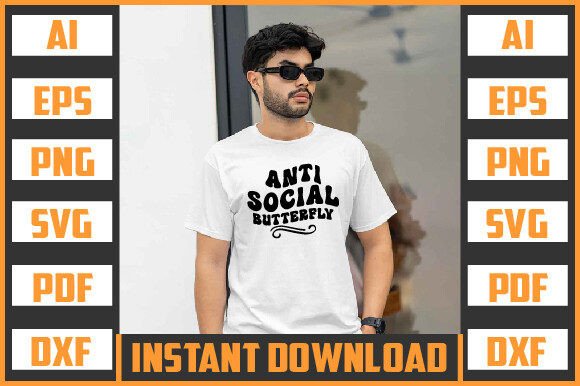
Anti Social Butterfly SVG: A Designer’s Real-World Review
As an embroidery designer who has spent countless hours digitizing and testing files for client projects, I have developed a keen eye for what works in the hoop and what merely looks good on a screen. When I first encountered the ANTI SOCIAL BUTTERFLY SVG, my initial reaction was one of amused recognition. The concept plays on a modern cultural mood—introversion wrapped in whimsical imagery—which is exactly the kind of thematic depth that sells well in today’s handmade market. However, aesthetic appeal is only half the battle. The real question for any serious crafter or Etsy seller is how this design translates from a digital graphic into a tangible, stitched reality.
First Impressions and Visual Personality
The design centers on a butterfly motif, but with a twist that suggests a retreat from social noise. Visually, it balances organic curves with a bold, statement-making presence. For those of us working in Crafts and digital Graphics, we know that butterflies are a saturated niche. To stand out, the design needs character. This specific iteration offers a playful yet relatable vibe, making it ideal for customers who want to express their personality without saying a word. The layout appears clean, which is crucial for embroidery. Overly complex details often get lost in thread, but this design seems to prioritize clarity, ensuring that the message remains legible even from a distance.
Real-World Application: The Tote Bag Test
To truly evaluate a file, I mentally place it on various substrates. Let’s consider a custom embroidered tote bag, a staple for small shop products. Canvas is a forgiving fabric, providing a stable base for stitching. When I visualize the ANTI SOCIAL BUTTERFLY SVG on a natural cotton tote, the contrast between the thread colors and the fabric texture becomes the focal point. If you are using a light-colored bag, dark threads will pop, creating a striking visual appeal. Conversely, on a dark denim tote, you would need high-contrast thread colors to maintain readability.
This design also shines on apparel. Imagine it centered on the chest of a oversized sweatshirt or hoodie. The "anti-social" theme pairs perfectly with the comfort-focused nature of loungewear. It transforms a basic garment into a personalized gift that feels curated and thoughtful. For boutique branding, this kind of design adds a layer of authenticity. It doesn’t look mass-produced; it looks like a piece of art created by a human hand, which is exactly what buyers are seeking when they support independent makers.
Technical Considerations for Stitching
While the concept is strong, the technical execution requires attention. Since this is provided as an SVG within a ZIP file, it is primarily a vector graphic intended for cutting or printing, but many crafters adapt these for embroidery using auto-digitizing software or manual conversion. If you are converting this digital embroidery file yourself, you must be mindful of stitch density. Butterflies often have delicate wings. If the stitch density is too high, the fabric may pucker, especially on thinner materials like t-shirts or baby clothes. If it is too low, the coverage will be patchy.
I recommend using a combination of stitch types. A satin stitch might work beautifully for the body of the butterfly or any bold lettering included in the design, offering a smooth, shiny finish. However, for the wings, a fill stitch with a slight angle variation can add texture and prevent the design from looking flat. Always use a proper stabilizer. For stretchy fabrics like jersey knits used in t-shirts and jumpers, a cut-away stabilizer is non-negotiable to prevent distortion after washing. For woven fabrics like pillow covers or aprons, a tear-away stabilizer might suffice, but testing is key.
Navigating Fabric and Hoop Constraints
One area where caution is needed is scale. If you are planning to use this on a cap or a small embroidered patch, you must check the dimensions carefully. Tiny details can merge together when stitched at a small size. What looks crisp on a computer monitor can become a blob of thread on a two-inch hoop. I always advise running a test stitch-out on scrap fabric of the same type you intend to use for the final product. This allows you to inspect small details and adjust tension before committing to your final piece.
Dark fabrics present another challenge. If the design includes light elements, you may need an underlay or a white base layer to ensure the colors remain vibrant. Without this, the fabric color can bleed through the stitches, muting the visual impact. Additionally, curved surfaces like caps require careful hooping. The design should be centered precisely, and the stabilizer must be secured tightly to avoid shifting during the stitching process.
Commercial Viability and Customer Trust
For commercial embroidery professionals and craft business owners, the value of a design lies in its versatility and marketability. The ANTI SOCIAL BUTTERFLY SVG fits seamlessly into several trending categories: mental health awareness, introvert humor, and nature-inspired decor. These themes have enduring appeal, meaning the design won’t feel outdated next season. When you offer a handmade product featuring this design, you are not just selling an item; you are selling an identity. Customers connect with the sentiment, which builds brand loyalty and trust.
However, professionalism is paramount. Ensure that your finished product is neat. Trim jump threads, press the garment to remove hoop marks, and package it beautifully. A well-executed embroidery project enhances the perceived value of the item. Whether you are creating holiday gifts, wedding favors, or everyday merchandise, the quality of the stitch work reflects directly on your brand. Use high-quality threads that resist fading, especially for items like mugs (if using sublimation alongside embroidery) or posters cards where color consistency matters across different mediums.
Practical Designer Notes
Before you launch this design in your shop or use it for a client, keep these practical tips in mind:
- Test on Scrap Fabric: Never skip this step. It saves time, money, and frustration.
- Check Thread Contrast: Ensure your thread colors stand out against the fabric background. Use a black and white mockup to verify value contrast.
- Review Licensing: Since the files are compressed in a ZIP file, confirm the license terms. Can you sell finished physical items? Can you resell the digital file? Always respect intellectual property rights.
- Inspect Detail Level: If the design has very fine lines, consider simplifying them for smaller hoop sizes to maintain clarity.
- Consider the End Use: Will the item be washed frequently? If so, reinforce the design with adequate stabilizer and secure backing.
In conclusion, the ANTI SOCIAL BUTTERFLY SVG is a compelling addition to your design assets. It bridges the gap between trendy graphics and timeless embroidery motifs. With careful attention to technical details like stitch density, stabilizer choice, and fabric selection, it can elevate your custom apparel and home decor offerings. It is not just a file; it is a tool for storytelling. Use it wisely, stitch it cleanly, and watch it resonate with your audience.