Review: Funny Composer Hourly Rate SVG for Embroidery
As a designer who spends more time staring at stitch simulations than I care to admit, I have learned that not every digital file translates well to thread. We live in an era where design assets are abundant, but finding a graphic that holds up under the needle requires a critical eye. Recently, I evaluated the Funny Composer Hourly Rate Svg Cut File to determine its viability for real-world embroidery projects. This is not just a quick glance; it is a practical assessment for Etsy sellers, craft business owners, and hobbyists who want to avoid wasted hoop time and broken needles.
First Impressions and Visual Personality
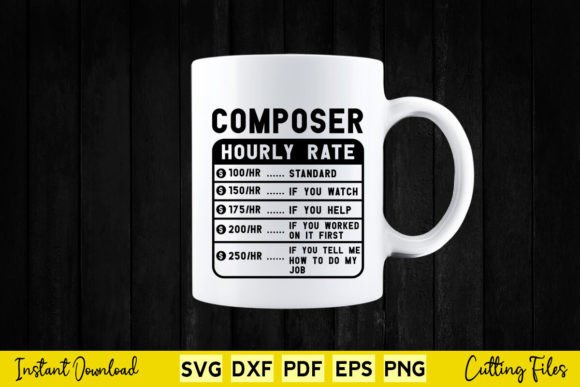
The initial appeal of this design lies in its wit. The concept plays on the classic struggle of creative professionals explaining their value, making it an instant conversation starter. Visually, the layout appears clean, which is crucial for embroidery. When we talk about Graphics in the context of Crafts, we are often looking for bold lines and clear negative space. This design seems to prioritize legibility, a trait that is essential when converting vector paths into satin or fill stitches.
The mood is lighthearted yet professional enough for a musician’s studio or a composer’s home office. It does not rely on overly intricate shading, which is a relief. Complex gradients are the enemy of efficient machine embroidery. Instead, the design leans on strong typography and simple iconography. This suggests that the final finished product will have a crisp, modern look rather than a cluttered or muddy appearance. For a personalized gift, this balance of humor and clarity is exactly what drives buyer engagement.
Real-World Application: The Sweatshirt Test
To truly understand the potential of the Funny Composer Hourly Rate Svg Cut File, I imagined applying it to a mid-weight cotton blend sweatshirt. This is a staple item for any small shop product line. The chest area of a sweatshirt offers a stable, flat surface ideal for medium-sized designs. In this scenario, the text needs to remain readable from a distance. If the lettering is too thin, the stitches may not cover the fabric adequately, leading to gaps.
I also considered its use on a canvas tote bag design. Tote bags are popular among musicians for carrying sheet music and instruments. Here, the durability of the stitch becomes paramount. A design like this, likely relying on standard fill stitch techniques for larger areas and satin stitch for borders or text, would hold up well against the rougher texture of canvas. However, the stitch density must be balanced. Too dense, and the fabric puckers; too sparse, and the backing shows through. This is where the quality of the underlying embroidery file matters most.
Versatility Across Products
Beyond apparel, this design has legs in the home decor market. Imagine it stitched onto a pillow cover for a music teacher’s lounge or an apron for a crafty composer who also enjoys cooking. The humor translates across these mediums. For holiday embroidery gifts, such as a stocking for a music student, the design adds a touch of personality that generic patterns lack. It serves as a strong custom apparel option for band merch or studio branding, allowing commercial embroidery clients to showcase their identity with a wink.
Technical Considerations and Constraints
While the concept is strong, execution is everything. As an experienced reviewer, I must highlight where caution is needed. If you plan to use this on a curved surface, such as a cap, you must check the size carefully. Caps have limited hoop space and a difficult curvature. If the design includes small, detailed corners or tiny lettering, these elements may distort or fail to stitch out cleanly on a baseball hat. Always confirm the recommended hoop size before starting.
Fabric choice is another critical variable. On stretchy fabrics like jersey knits, a proper stabilizer is non-negotiable. Without it, even the best machine embroidery design will warp. For dark fabrics, consider how the thread colors contrast. If the design relies on light threads against a black hoodie, ensure the digitizing accounts for pull compensation so the background fabric does not peek through the letters. Testing on scrap fabric is the only way to be sure.
Additionally, be mindful of washability. Items like tea towels or baby clothes undergo frequent laundering. If the design uses dense stitching, it may become stiff over time. For baby embroidery, comfort is key, so a lighter stitch count or an applique design variation might be preferable if available. Always check if the file supports different formats suitable for your specific machine.
Enhancing Brand Value and Customer Trust
For the digital product seller or handmade product creator, the quality of your design reflects directly on your brand. Using a well-digitized file like the Funny Composer Hourly Rate Svg Cut File signals professionalism. Customers can tell when a design is sloppy. Clean edges and consistent tension build trust. When you present a printable mockup or a photo of the actual item, the clarity of the embroidery should be evident.
This design fits well into a niche market. Musicians, composers, and music students are a passionate community. By offering a product that speaks their language, you create an emotional connection. This increases the perceived value of the item. It is not just a shirt; it is an inside joke, a badge of honor. This kind of resonance drives repeat business and word-of-mouth referrals for your craft business.
Practical Designer Notes for Success
Before you commit to production, follow these steps to ensure the best results:
- Test on Scrap Fabric: Always run a test stitch-out on the same material you intend to use for the final product. This reveals issues with tension and density.
- Check Thread Contrast: View the design in black and white to ensure the shapes are distinct without color reliance. This helps in selecting the right thread colors for various fabric backgrounds.
- Review Stitch Density: If the file allows, adjust the density settings in your software. Lower density for stretchy fabrics, higher for stable wovens.
- Confirm Hoop Size: Ensure the design fits comfortably within your hoop with adequate margin for framing.
- Inspect Small Details: Zoom in on the digital preview. Are there tiny elements that might break? If so, consider simplifying or enlarging the design.
- Verify Licensing: Since this is a digital embroidery file, confirm the license terms. Can you sell the finished physical items? Can you resell the digital file? Most creators allow selling finished goods but prohibit redistributing the file itself.
In conclusion, the Funny Composer Hourly Rate Svg Cut File offers a charming and commercially viable option for those in the music and craft niches. Its success depends on thoughtful application, proper technical setup, and an understanding of your materials. By treating it with the respect it deserves during the digitizing and stitching process, you can create a finished product that delights customers and stands the test of time. Whether for a holiday gift or a boutique inventory staple, this design has the potential to be a standout item in your portfolio.