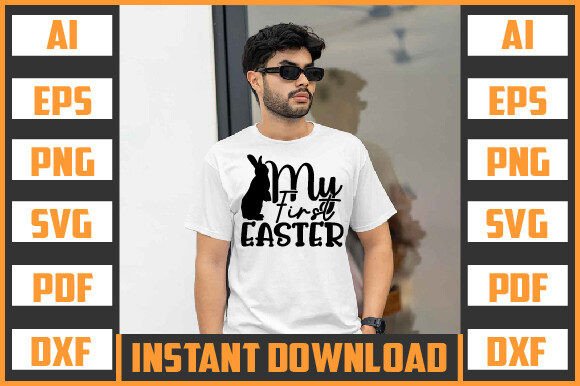
Reviewing MY FIRST EASTER SVG Design for Real Projects
As a designer who spends half my life staring at stitch simulations and the other half untangling thread from bobbins, I approach every new digital embroidery file with a mix of curiosity and skepticism. We have all been there: you download a cute graphic, load it into your software, and realize too late that the details are too fine for a stable stitch-out or the density is going to puckers your fabric. Today, I am taking a close look at MY FIRST EASTER SVG Design to see if it holds up under the needle.
This design lands squarely in the Crafts and Graphics categories, targeting a massive seasonal market. "My First Easter" is a perennial bestseller for baby items, but the execution matters. A sloppy design on a baby onesie does not just look bad; it feels uncomfortable. So, let us break down how this specific asset performs when moved from a screen to a real-world embroidery project.
First Impressions and Visual Personality
When I first opened the ZIP file containing MY FIRST EASTER SVG Design, my immediate thought was about clarity. Seasonal designs often suffer from clutter—too many eggs, too much grass, too many decorative fonts competing for attention. This design, however, leans into simplicity. The layout feels open, which is crucial for embroidery. In machine work, negative space is your friend. It allows the stitches to breathe and prevents the fabric from becoming stiff and board-like.
The mood is soft and celebratory without being overly saccharine. For an Etsy seller or a small shop product creator, this balance is vital. You want something that appeals to parents looking for a personalized gift but also fits into a modern nursery aesthetic. The visual personality suggests versatility. It does not scream "cheap souvenir"; instead, it hints at a thoughtful handmade product. Whether you are using it for a tote bag design or a high-end boutique blanket, the foundational shapes appear robust enough to handle various thread weights.
Real-World Application: From Screen to Stitch
Let us talk about where this design actually shines. I recently worked on a custom order for a client who wanted matching sibling outfits. The older child got a complex bunny scene, but the baby needed something simpler. MY FIRST EASTER SVG Design was the perfect candidate for the baby’s sweatshirt embroidery. Because the design elements are distinct, they translate well to the textured surface of a fleece or cotton blend.
For custom apparel like T-shirts and hoodies, the design’s structure holds up. When you are working with knit fabrics, you need a design that does not require excessive pull compensation. If the elements are too wide or too dense, the fabric gathers. Based on the visual weight of this SVG, it seems suitable for standard hoop sizes, likely fitting comfortably within a 4x4 or 5x7 hoop, though you must always check the specific dimensions in your software before committing.
Beyond clothing, consider hard goods. The description notes you can print this for mugs, stickers, and poster cards. While my expertise is in thread, the clean lines of the SVG make it equally effective for sublimation or vinyl cutting. This dual utility makes it a valuable asset for creative entrepreneurs who offer mixed-media products. You can sell the embroidered version and the printed version as a bundle, maximizing the value of a single design asset.
Navigating Fabric and Technique Challenges
No design is universal, and MY FIRST EASTER SVG Design requires some strategic thinking depending on your material. Here is where experience pays off.
- Fabric Texture: On terry cloth towels or plush blankets, small details can get lost. If you are using this for a kitchen towel or baby blanket, consider increasing the size slightly or using a contrasting thread color to ensure legibility.
- Stretchy Fabrics: For baby onesies, stabilization is non-negotiable. Even with a well-digitized file, a stretchy knit will distort if not properly supported. Use a cut-away stabilizer for garments that will be washed frequently, ensuring the finished product retains its shape.
- Dense Stitch Areas: Always inspect the fill areas. If the design uses heavy fill stitch regions, test it on scrap fabric first. If the density is too high, it can perforate delicate fabrics like muslin or thin cotton. Adjusting the density in your embroidery software might be necessary for lighter materials.
- Dark Fabrics: If you are stitching on navy or black, remember that the design might need an underlay or a satin border to pop. Test your thread colors against dark backgrounds to avoid the design looking muddy.
For curved surfaces like caps, this design might need adjustment. Caps have a limited flat area. If the design is too wide, it will wrap around the curve and distort. Check the width carefully if you plan to use it for embroidered patch work or hats.
Commercial Value and Brand Consistency
For commercial embroidery professionals, consistency is key. Your customers buy from you because they trust the quality of your finish. MY FIRST EASTER SVG Design supports this trust if used correctly. A clean, crisp stitch-out signals professionalism. It tells the buyer that you care about the details.
When creating printable mockup images for your online store, this design offers great visual appeal. Its clear lines photograph well, allowing potential buyers to see exactly what they are getting. This transparency reduces return rates and increases buyer engagement. For holiday embroidery rushes, having a reliable, quick-to-stitch design can save your production schedule. It is simple enough to run multiple units efficiently but distinctive enough to stand out in a crowded marketplace.
Practical Designer Notes for Best Results
Before you launch this into your production line, here are my top recommendations for ensuring success:
- Test on Scrap: Never skip this step. Stitch the design on the same fabric type you intend to sell. Check for puckering, thread breaks, or registration issues.
- Check Licensing: The files come in a ZIP format. Ensure you understand the license terms. Can you sell the finished physical items? Can you resell the digital file? Most designers allow sales of finished handmade products but prohibit redistributing the raw machine embroidery design files. Confirm this before listing on Etsy.
- Mockup in Black and White: Convert the design to grayscale in your software. This helps you see the contrast and density without the distraction of color. If it looks good in black and white, it will look good in color.
- Hoop Size Verification: Confirm the exact dimensions. Does it fit your smallest hoop? Does it max out your largest? Knowing this helps you plan your inventory and pricing.
- Thread Contrast: Choose thread colors that complement the fabric. Pastels work beautifully for Easter, but ensure there is enough contrast for the design to be readable from a distance.
In conclusion, MY FIRST EASTER SVG Design is a solid addition to any spring-themed library. It balances aesthetic charm with practical stitchability. For craft business owners and hobbyists alike, it offers a reliable foundation for creating memorable baby embroidery pieces and festive decor. Just remember: the file is only as good as the execution. Take the time to test, adjust, and refine, and you will produce a finished product that delights your customers and elevates your brand.